



Commercial Spray Foam Insulation

The Ultimate Insulation Solution for Modern Buildings

In today’s competitive business environment, reducing operational costs while maintaining optimal building performance is crucial – and commercial spray foam insulation offers an unparalleled solution. As energy costs continue to rise, business owners and facility managers are increasingly turning to high-performance insulation materials that deliver superior results. Commercial spray foam stands apart from traditional insulation options, providing exceptional thermal protection while addressing multiple building envelope challenges simultaneously.

Commercial Spray Foam Insulation Contractor Toronto

Trusted By

SPFM Insulation and Coatings is trusted by hundreds of satisfied customers across the country, reflecting our commitment to customer satisfaction while providing top-tier insulation solutions to commercial properties, from warehouses to office buildings to industrial facilities.

Understanding Commercial Spray Foam Insulation

Commercial spray foam insulation represents a significant advancement over traditional insulation methods, utilizing expanding polyurethane foam to create a seamless thermal barrier. At its core, spray polyurethane foam insulation consists of two primary components that, when mixed and applied using special equipment, react to form an expanding foam that hardens into a solid insulating layer.

Open Cell vs. Closed Cell: Making the Right Choice

Two main types of spray foam dominate the commercial insulation industry:

  • Open cell spray foam: Lightweight and flexible with a density of approximately 0.5 pounds per cubic foot. This foam insulation expands significantly during application and features cells that are deliberately left open, allowing for better sound absorption and more cost-effective coverage. With r-values of approximately R-3.5 to R-4 per inch, open cell spray foam provides good insulation but is not recommended for applications where moisture resistance is crucial.

  • Closed cell spray foam: Denser and more rigid (typically 2 pounds per cubic foot), this medium density foam creates a more powerful thermal barrier with r values between R-6 and R-7 per inch. Closed cell spray foam insulation functions as both an effective air barrier and vapor barrier, making it ideal for exterior walls, roofs, and areas prone to moisture exposure.

Unlike fiberglass insulation or mineral wool, which can leave gaps and requires separate air sealing measures, spray polyurethane foam expands to fill even the smallest cracks, creating a continuous insulation layer that dramatically reduces air leakage and thermal bridging in your building structure.
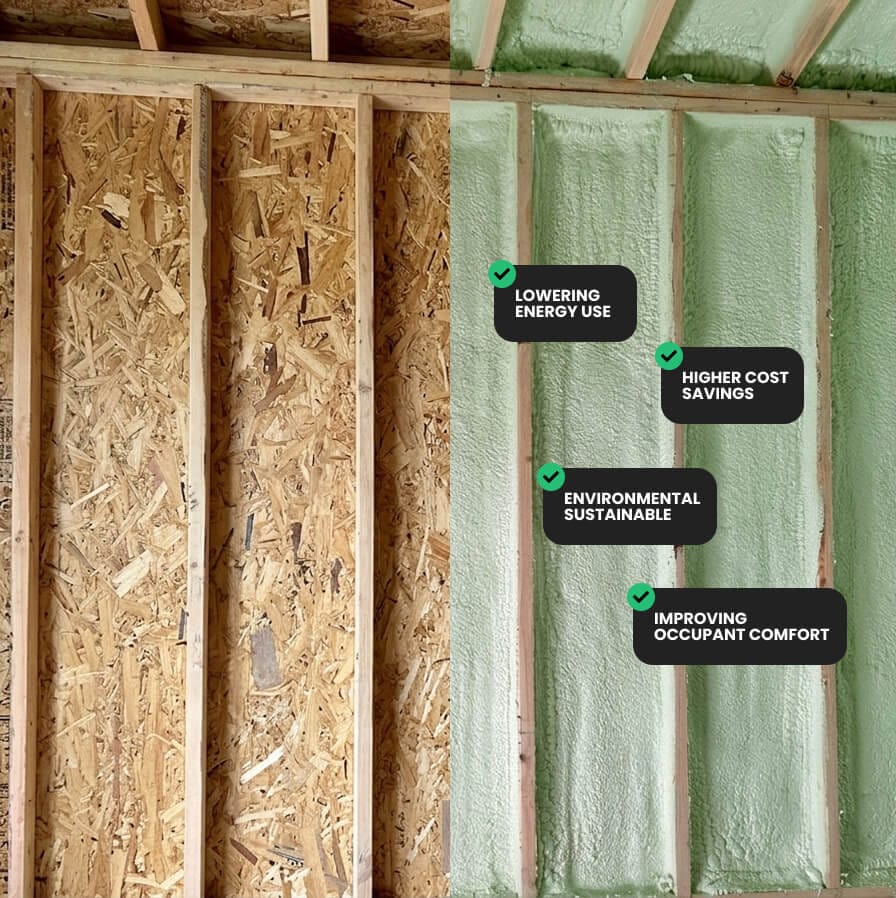

Spray foam before after

Key Benefits for Commercial Buildings

The advantages of commercial spray foam extend far beyond basic insulation, offering a comprehensive solution that addresses multiple building performance challenges simultaneously.

Superior Energy Efficiency

Commercial spray foam insulation creates an airtight building envelope that significantly reduces heating and cooling costs. Studies show that spray foam can reduce energy consumption by up to 50% compared to traditional insulation materials, delivering substantial savings on energy bills. For large commercial buildings with significant heating and cooling demands, these energy savings can translate to thousands of dollars annually.

Complete Air and Moisture Control

As an effective air barrier, spray foam prevents air leakage through the wall assembly, eliminating drafts and maintaining consistent indoor temperatures. Closed cell spray also serves as a vapor barrier, preventing moisture infiltration that can lead to mold growth and structural damage. This dual protection is particularly valuable in commercial settings where moisture control directly impacts inventory quality, equipment longevity, and occupant health.

Structural Reinforcement and Longevity

When applied to walls, floors, and roofs, closed cell spray foam adds significant structural strength to the building structure. This additional rigidity helps resist wind forces, reduces wall racking, and can extend the lifespan of the entire building envelope. Many commercial buildings with spray foam insulation show improved resistance to settling and age-related structural issues.

Noise Reduction

Open cell spray foam provides excellent acoustic performance, reducing sound transmission between spaces - a valuable benefit in office buildings, hotels, and healthcare facilities where noise control contributes directly to customer satisfaction and productivity.

Applications in Commercial Settings

The versatility of commercial spray foam makes it suitable for virtually any commercial project, with specialized applications that can be tailored to different building types and requirements.
Commercial Spray Foam Insulation in Toronto

Office Buildings and Retail Spaces

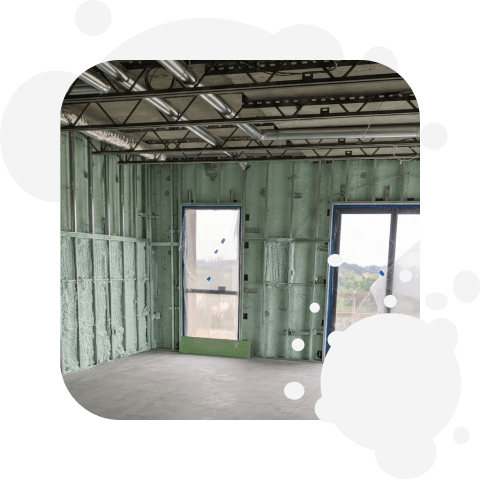
In office environments, spray foam creates comfortable, quiet workspaces while reducing energy costs. The insulation can be installed in walls, floors, and ceilings, creating a complete thermal envelope that maintains consistent temperatures throughout the building. For retail stores, stable indoor conditions enhance shopper experience while reducing utility expenses.

Warehouses and Industrial Facilities

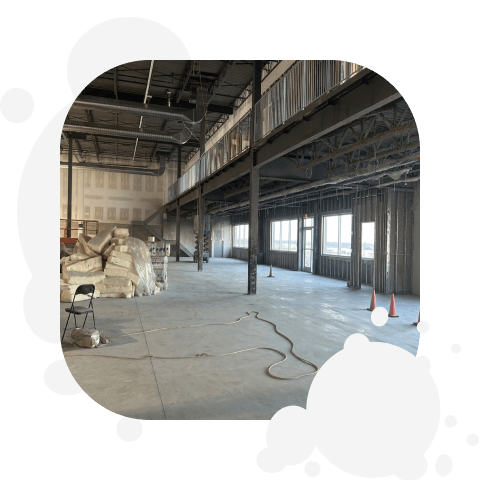
Large, open industrial spaces benefit tremendously from spray foam’s extensive coverage capability. The insulation can be left exposed on warehouse ceilings and walls, providing both thermal insulation and a finished appearance. Temperature-sensitive inventory remains protected from extreme temperature fluctuations, while heating and cooling systems operate more efficiently.

Warehouses and Industrial Facilities_ Insulation
Cementitious Fireproof Coating Toronto

Commercial Roofs and Attics

Spray foam excels in commercial roof applications, where it creates a seamless, waterproof layer while providing exceptional insulation value. Applied directly to the underside of the roof deck, it prevents heat transfer at the source while sealing all potential air leakage pathways. This approach eliminates the need for roof vents in many cases, further improving energy performance.

Cold Storage and Temperature-Controlled Environments

Facilities requiring precise temperature control, such as food processing plants or pharmaceutical storage, benefit from closed cell spray foam’s superior insulating properties and moisture resistance. The continuous insulation layer prevents condensation even in extreme temperature differentials.

Cold Storage and Temperature-Controlled Environments_ Spray Foam Insulation
Foundation Insulation with Commercial Spray Foam

Foundation Insulation with Commercial Spray Foam

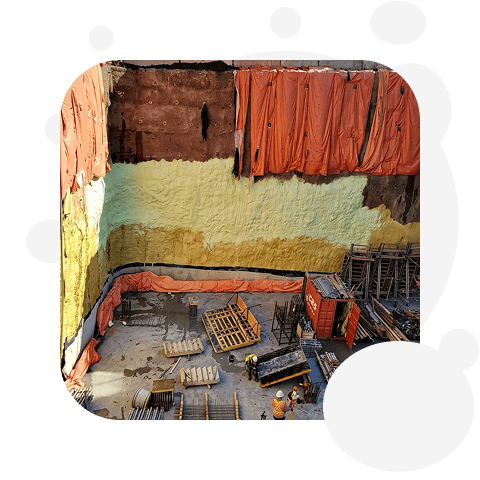
Foundation insulation is essential for maintaining energy efficiency and structural integrity in commercial buildings. Spray polyurethane foam insulation, especially closed cell spray foam, offers superior adhesion, moisture resistance, and forms a continuous air and vapor barrier. Applied to foundation walls and slab edges, it prevents heat loss, seals cracks and irregular surfaces, reduces heating costs, and minimizes moisture infiltration that can cause mold or damage. Additionally, it enhances fire safety and pest resistance, making it ideal for commercial projects. Proper installation by certified professionals ensures compliance with building codes and maximizes insulation benefits.

Our Partners

Installation Process and Considerations

Installing commercial spray foam requires specialized equipment and professional expertise to ensure optimal performance and compliance with building codes. This is not a do-it-yourself project—professional installation by certified contractors is essential.

Installation Process and Considerations

Commercial insulation services utilize truck-mounted or portable spray systems that heat and mix the polyurethane components before application. Skilled technicians apply the foam in layers, allowing each to cure properly before adding the next. The installation process requires protective equipment for workers and temporary evacuation of the building during application due to the chemicals involved.

Building Code Compliance and Fire Safety

Commercial spray foam installations must meet strict building codes regarding fire resistance and safety. Many formulations include fire retardants and have been tested to meet specific fire safety standards. Depending on the application and local requirements, spray foam may need to be covered with a thermal barrier or ignition barrier when left exposed in certain areas.

Modern spray foam products have been extensively tested at high temperatures to ensure they meet fire resistance requirements for commercial buildings. Your installation contractors should be well-versed in all applicable building codes for your specific project.

Lower heat loss. Increase energy savings.

Professional commercial insulation services should offer a thorough assessment of your building’s needs and provide a detailed, no obligation estimate for the work. This should include specifications for the materials, coverage areas, expected performance, and complete cost breakdown.

How does spray foam insulation compare to traditional insulation materials?

Unlike traditional insulation such as fiberglass or mineral wool, spray foam expands to fill gaps and cracks, creating an effective air barrier and vapor barrier. This results in superior thermal insulation, reduced energy costs, and improved building durability.

Open cell spray foam is lightweight and flexible, providing good sound absorption and insulation with an R-value around R-3.5 to R-4 per inch. Closed cell spray foam is denser and more rigid, offering higher R-values (R-6 to R-7 per inch), moisture resistance, and structural reinforcement.

Yes, spray foam insulation is versatile and suitable for both new construction and retrofit applications. It can be applied to walls, roofs, floors, attics, and foundations to improve thermal performance and air sealing.

When installed by certified professionals using approved materials, spray foam insulation meets all relevant building codes and fire safety standards. Some applications may require a thermal or ignition barrier for added protection when foam is left exposed.

Spray foam insulation is durable and long-lasting, often maintaining its thermal and air sealing properties for the lifetime of the building when properly installed and maintained.

Yes, by creating an airtight and well-insulated building envelope, spray foam insulation significantly reduces heating and cooling costs, leading to substantial energy savings over time.

Open cell spray foam is particularly effective at reducing sound transmission, making it a great choice for office buildings, hotels, and healthcare facilities where noise control is important.